What they do
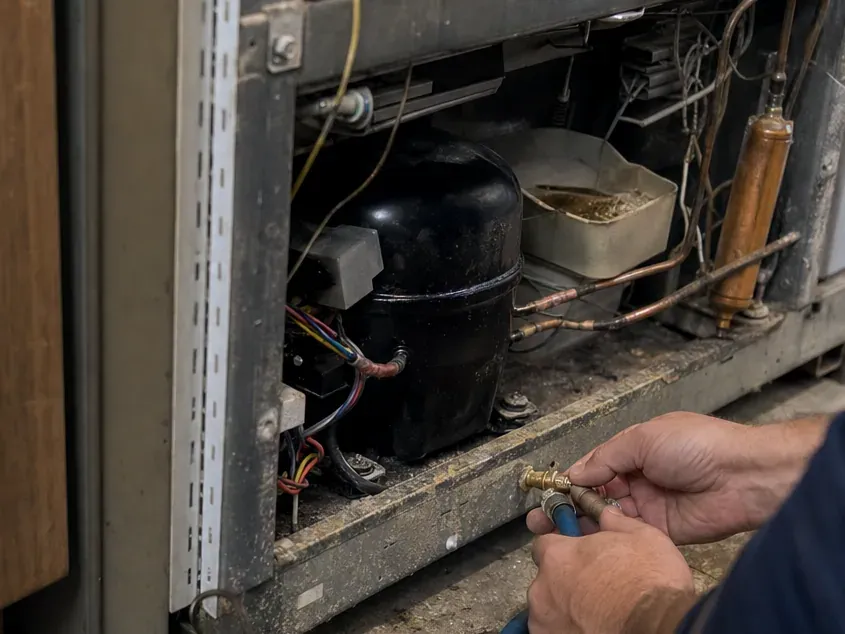
During each defrost the coil sheds its frost as water. A trough under the coil collects it and feeds the drain tube, which carries it down to the pan. There it waits until warm air from the condenser and compressor dries it off. Nothing pumps it: gravity and warm air do the work.
Five ways they fail
The pan cracks
Plastic that has sat beside a warm compressor for years turns brittle, and a hairline crack leaks a little after every defrost.
The pan moves
Pull the unit out for new flooring or a cleaning, and the pan can end up off its seat, so the tube drips past it.
The tube slips or splits
Its end can work loose from the pan or the trough, and an old tube can split along its length.
The tube clogs
Debris or ice closes it, and the water backs up inside the cabinet instead of reaching the pan.
The pan overflows
More meltwater arrives than it can dry, usually because a door or gasket lets damp air in all day.
Replacing them
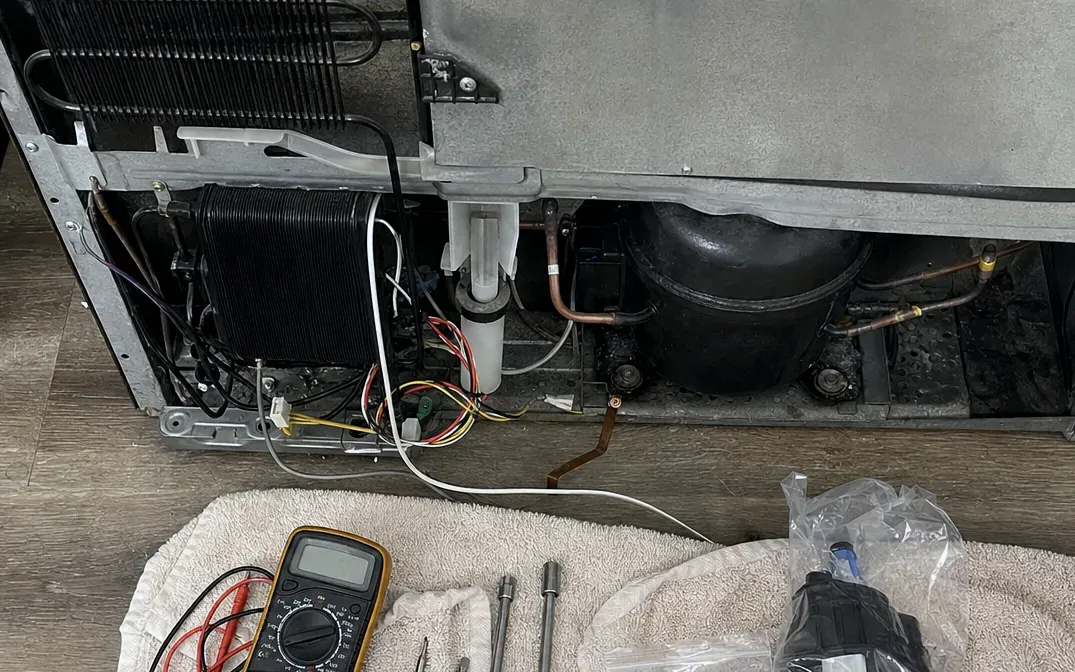
We read the model and series first, because pans and tubes differ between them. On a built-in the base grille comes off to reach the pan; following the whole tube can mean easing the unit forward out of its opening, which we do with the floor protected. A new pan or tube is priced on the spot once the model is known.
If the tube keeps icing shut, the real fault is usually upstream, in the defrost system:
- Visit and diagnosis $89 Credited to the repair
- Defrost heater, thermostat or sensor $300–$690 When ice keeps closing the drain
- Door gasket $280–$620 When a leaky seal floods the pan
Questions about the pan
How do I know if the drain pan is cracked?
Usually you cannot see it without the grille off, and a cracked pan can hold water for hours before it gives itself away. The clues: a damp patch under the unit that appears some time after a defrost, a musty smell at the grille, or a stain below that grows in steps rather than steadily.
Can I just empty or clean the pan?
You can wipe it out if you can reach it with the power off, and a pan full of slime or sediment deserves a clean. But a drain pan should never need emptying. If it fills up, either too much water is arriving or it is not drying, and that is the fault to find.