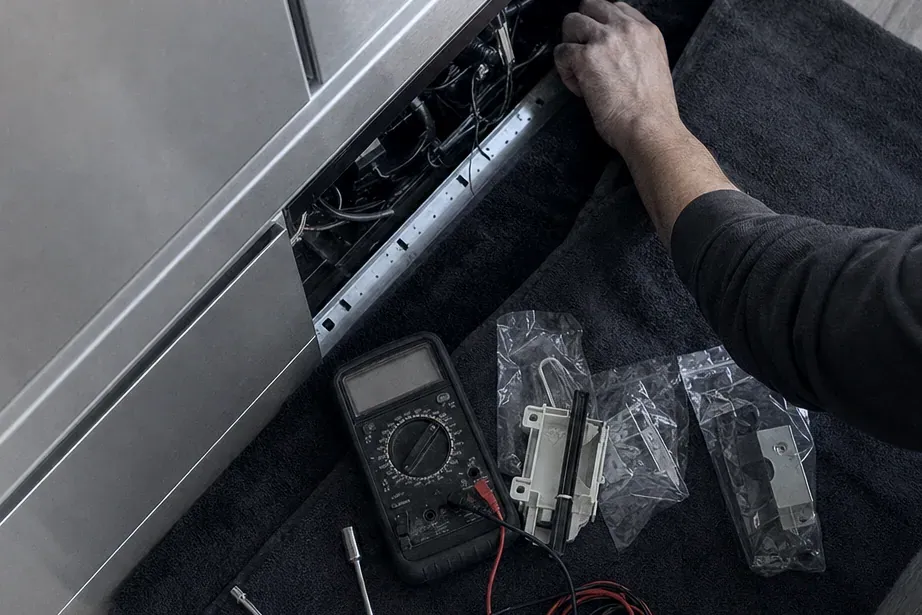
The four sources
-
Defrost drain
Several times a day the coil warms up to shed its frost. The meltwater runs into a trough and down a tube toward the drain pan.
-
Drain pan
A shallow tray in the machine compartment where that water sits until warm air from the compressor area dries it off.
-
Ice maker supply
A small water line under pressure, a valve at the back of the unit and a fill tube up to the ice maker.
-
Condensation
Damp kitchen air meeting a cold surface: a door edge that no longer seals, or the cabinet next to it.
Read the timing
Water that keeps coming steadily, day and night, even with the ice bin full, is almost always the supply line, because it is under pressure all the time. Water that arrives in bursts a few times a day follows the defrost cycle, so the drain or the pan is the suspect. Sweat follows the weather and the cooking.
When it stays inside the cabinet
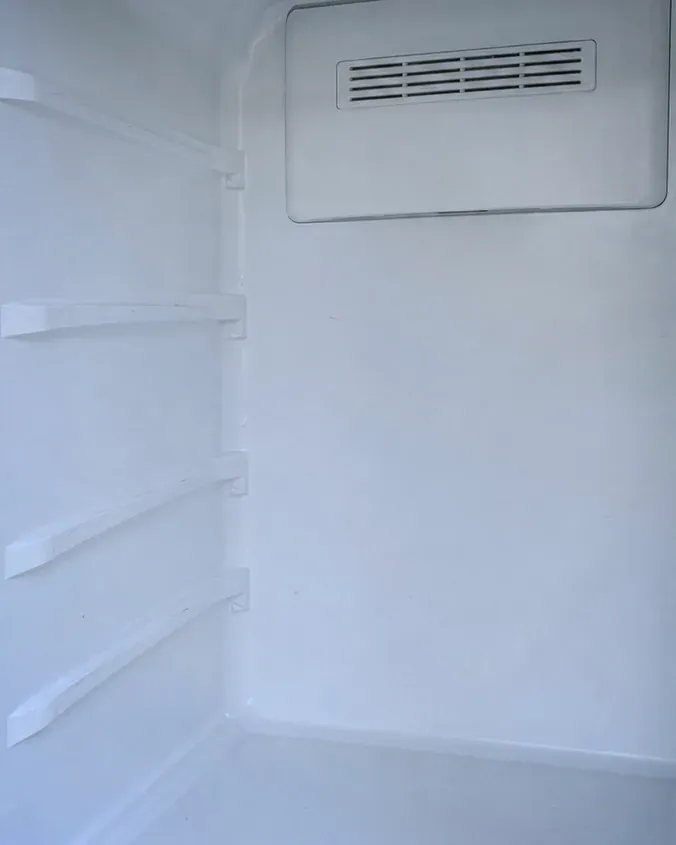
Water pooling inside the unit means it never reached the pan: the drain opening is blocked, usually by ice. That points at the defrost side as much as at the drain itself.
When it has gone through the floor
If you found it as a mark on the ceiling below the kitchen, start from the stain on the ceiling. For the two parts that often sit behind one, see the drain pan and tube.
Two leak questions
Is a small puddle worth a visit?
One that keeps coming back is. Even a cup a day soaking into a wood subfloor adds up over a few weeks, and in a house with a finished room below, the first sign you see may be a stain on that ceiling. Dry it, watch when it returns, and call with the timing.
Can the water filter leak?
It can. On models with a filter, a cartridge that is not fully seated, or a seal that has hardened with age, can drip where the filter sits. Close the ice maker valve, reseat the cartridge, open the valve and watch. If it still drips, the housing is the next suspect.